Why Every Small Business Needs a Website That Generates Leads
A small business website should do more than exist. Here is how a lead generating website builds trust, sharpens messaging, improves local visibility, and turns visitors into enquiries.
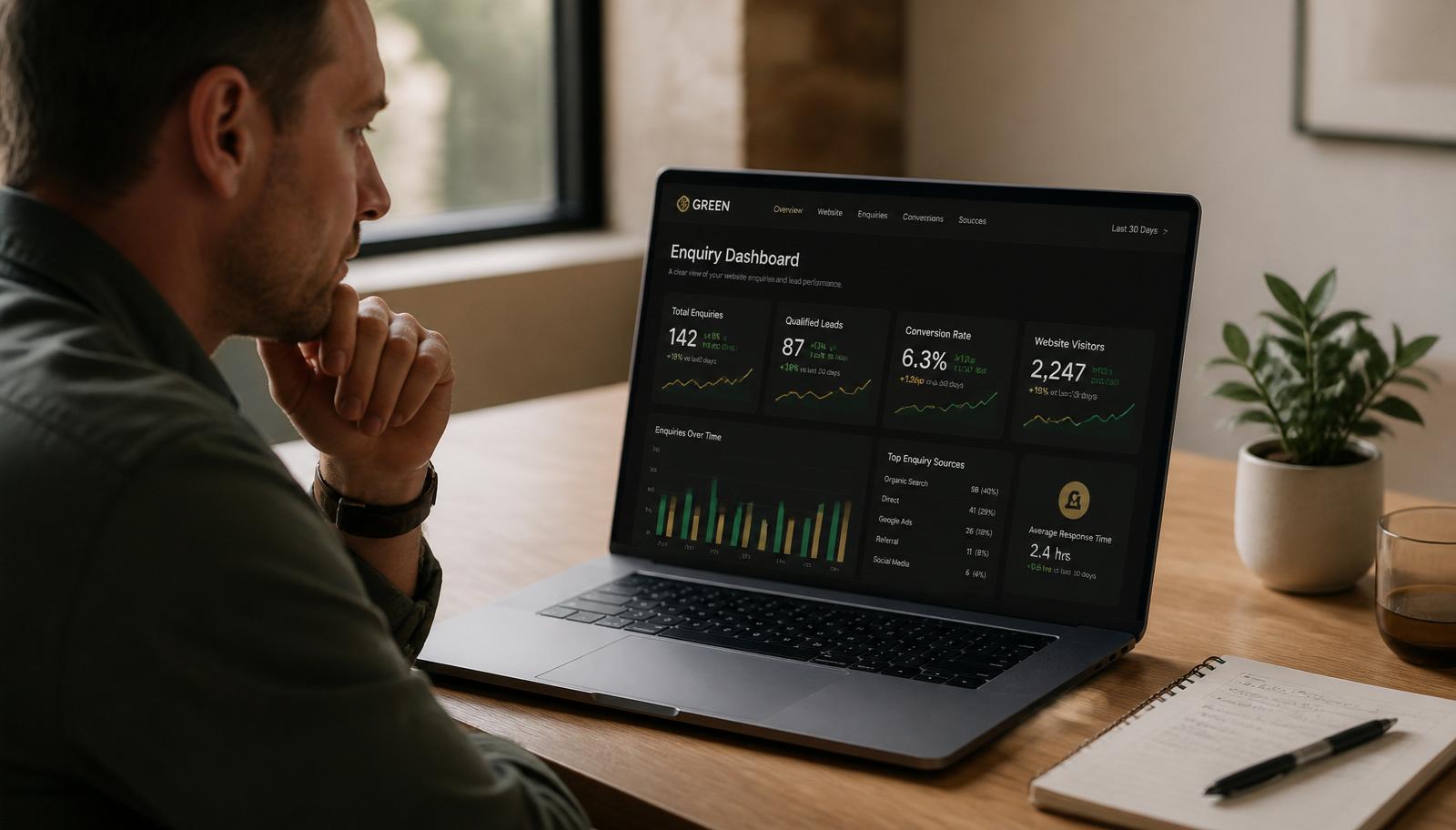
A website should not only exist so a business can say it has one. For a small business, the website should help people understand the offer, trust the business, and take the next step.
Many small businesses lose potential customers because their website is outdated, unclear, slow, or difficult to use. Visitors arrive, look around for a few seconds, and leave without calling, booking, or sending an enquiry.
A lead-generating website solves that problem by turning the website into a clear business asset.
A website should build trust quickly
Most customers will check a business online before they make contact. If the website looks outdated, confusing, or incomplete, it can reduce confidence before the conversation even begins.
A strong website should explain:
- What the business does
- Who it helps
- Why customers should trust it
- What services or products are available
- How to make contact
Trust is especially important for local businesses, service providers, clinics, consultants, trades, and professional firms. The website often creates the first impression before a customer speaks to anyone.
Clear messaging helps visitors take action
Many websites fail because they are too vague. A visitor should understand the business within a few seconds.
The homepage should answer simple questions:
- What do you offer?
- Who is it for?
- Why should someone choose you?
- What should they do next?
If the website does not answer these questions clearly, visitors may leave and choose a competitor instead.
A good website removes confusion. It guides people toward a clear next step, such as booking a call, requesting a quote, sending an enquiry, or calling the business.
Lead generation depends on strong calls-to-action
A website needs clear calls-to-action throughout the page.
Examples include:
- Book a consultation
- Request a quote
- Call now
- Send an enquiry
- Download a guide
- Start a free audit
The best call-to-action depends on the business model. A clinic may want bookings. A trades business may want quote requests. A consultant may want discovery calls. A product business may want catalogue enquiries.
The important point is that every key page should guide the visitor toward one useful action.
Local visibility matters
A website also helps a business become more visible on Google.
For small businesses, this usually means building pages around services, locations, and customer problems. A clear website structure can support local SEO by helping search engines understand what the business offers and where it operates.
Useful SEO foundations include:
- Clear page titles
- Service pages
- Location signals
- Metadata
- Fast loading pages
- Mobile-friendly design
- Internal links
- Google Business Profile alignment
SEO does not guarantee instant rankings, but a well-structured website gives the business a stronger foundation for visibility.
A website should make enquiries easier
Even when a visitor is interested, they may leave if contacting the business feels difficult.
A lead-generating website should make contact simple through:
- Contact forms
- Phone links
- Email links
- WhatsApp buttons
- Booking forms
- Clear opening hours
- Location information
- Simple navigation
The easier it is to enquire, the less friction there is between interest and action.
Tracking helps the business improve
A website should also help the business understand what is working.
With analytics and tracking, a business can see:
- How many people visit the website
- Which pages they view
- Where enquiries come from
- Which services attract attention
- Which pages need improvement
Without tracking, business owners are often guessing. With tracking, they can make better decisions.
The website is the centre of the growth system
For many small businesses, the website connects everything else:
- Google search
- Local SEO
- Social media
- Paid ads
- Referrals
- Booking systems
- Automation
- Reporting
This is why the website should not be treated as a simple online brochure. It should be the conversion hub that turns attention into enquiries.
Final thoughts
A small business website should do more than look professional. It should build trust, explain the offer, guide visitors, capture enquiries, support visibility, and make performance easier to measure.
The strongest websites are not just designed well. They are structured around business outcomes.
If your website is not helping generate enquiries, it may be time to review the structure, messaging, calls-to-action, SEO foundations, and lead capture process.
Next step
Ready to turn your website into a lead engine?
Book a free growth audit. We'll review your website, visibility, and lead capture, then map out the highest-impact next steps.
Book a Free Growth Audit